Identify Sharp Thinkers and Problem Solvers with Aptitude & Analytical Tests
Measure candidates' logical reasoning, quantitative analysis, and critical thinking skills. Build high-performing teams with professionals who excel at data-driven decision making and problem solving.
Get Started "


10K+ Candidates Assessed



Understanding Advanced Analytical Intelligence Architecture
Analytical excellence represents the convergence of cognitive psychology, mathematical reasoning, and strategic thinking—measuring the sophisticated mental processes that drive business intelligence, strategic planning, and data-driven organizational success. Our institutional-grade evaluations provide comprehensive analysis of:
Cognitive Reasoning Framework
-
 Advanced logical reasoning and pattern recognition tests with systematic problem decomposition
-
Strategic recognition and predictive talent assessments
-
Complex hypothesis generation and scientific thinking methodologies
-
Multi-dimensional analysis and systems-level thinking competencies
Quantitative Intelligence Architecture
-
Statistical reasoning and mathematical modeling proficiency
-
Advanced data interpretation and analytical insight generation
-
Financial modeling and quantitative aptitude tests for business analysis expertise
-
Risk assessment and probabilistic thinking capabilities

The Best Analytical & Aptitude Tests for Recruitment & L&D
Our Aptitude and Analytical Assessments are ideal for identifying high-potential candidates who can quickly grasp new concepts, analyze data, and make rational decisions under pressure.
What We Measure
Analytical and aptitude tests assess a candidate’s logical reasoning, problem-solving methodology, and quantitative thinking skills. Widely used in hiring and talent assessment, these evaluations provide valuable insights into:
-
Logical reasoning and deductive thinking
-
Quantitative analysis and numerical reasoning
-
Problem decomposition and solution strategies
-
Critical thinking and decision-making processes
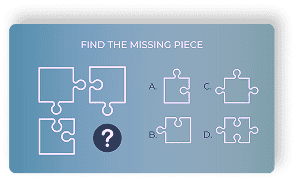
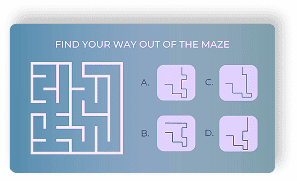
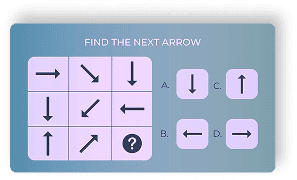
Analytical & Aptitude Tests
Logical Reasoning Mastery
Evaluate deductive reasoning, pattern analysis, and systematic problem-solving approaches.
Quantitative Analysis Skills
Test numerical reasoning, statistical interpretation, and mathematical problem-solving.
Critical Thinking Assessment
Measure ability to evaluate information objectively and make sound judgments.
Data Interpretation Abilities
Assess skills in analyzing charts, graphs, and complex datasets to draw insights.
Why Use MyAnatomy's Aptitude Tests?
Benchmarked against a diverse global dataset of 10,000+ candidates across geographies, industries, and job roles
Frequently Asked Questions
What is an aptitude and analytical assessment and why does it matter in hiring?
An aptitude and analytical assessment measures a candidate's ability to think logically, interpret data, solve problems and make sound decisions under pressure. In hiring, it matters because job performance — especially in analytical, leadership and strategic roles — is far more accurately predicted by how a candidate thinks than by what their resume says. It gives hiring teams an objective, standardised way to identify sharp thinkers before the interview stage.
Which roles and industries benefit most from aptitude and analytical assessments?
These assessments are valuable across a wide range of functions — data science, finance and accounting, business analysis, consulting, operations, product management, engineering and any role requiring structured thinking or data-driven decision making. However, they are equally useful as a baseline evaluation for any role where cognitive ability and problem-solving directly impact performance outcomes.
How is this different from a general IQ or intelligence test?
Unlike broad IQ tests, MyAnatomy's aptitude and analytical assessments are designed specifically for workplace hiring contexts. They evaluate practical dimensions — logical reasoning, quantitative analysis, data interpretation, critical thinking and decision-making — that are directly linked to on-the-job performance. Every assessment is benchmarked against a dataset of 10,000+ candidates across industries and geographies, making results contextually meaningful rather than generic.
Can these assessments identify high-potential candidates who may not have strong academic backgrounds?
Yes — and this is one of the most significant advantages of aptitude-based hiring. Candidates who demonstrate strong logical reasoning, pattern recognition and problem-solving ability often outperform those with impressive credentials but limited analytical capability. These assessments are designed to surface potential regardless of educational pedigree, widening your talent pool considerably.
How do aptitude assessments help reduce interview load for hiring teams?
By filtering candidates on demonstrated analytical ability before the interview stage, your team only engages with those who have already proven they can think, reason and analyse effectively. This reduces the number of unproductive interview rounds significantly — our data shows a 50% faster filtering rate for analytical roles — allowing hiring managers to focus their time on the most promising candidates.
Are the assessments adaptive or does every candidate get the same set of questions?
The assessments are structured to maintain consistency and fairness across all candidates while ensuring question pools are varied enough to prevent pattern learning or sharing. This balance ensures every candidate is evaluated on the same competency parameters while maintaining assessment integrity at scale.
How do we ensure the results are not influenced by test-taking experience or coaching?
MyAnatomy's assessments are designed around cognitive reasoning rather than formulaic problem types. Candidates familiar with aptitude test formats may have marginal advantages in speed, but the depth of logical reasoning, data interpretation and critical thinking measured goes beyond what coaching can replicate. Combined with our proctoring tools, assessment integrity is maintained throughout.
What does the assessment report include and how do we use it to shortlist candidates?
Each report provides individual scores across logical reasoning, quantitative analysis, critical thinking and data interpretation — along with an overall analytical capability score benchmarked against industry standards. Hiring managers can use these insights to set role-specific cut-off thresholds, compare candidates objectively and prioritise interview slots for those who demonstrate the strongest analytical foundation.
Can these assessments be used for internal talent development and promotion decisions as well?
Absolutely. Many organisations use aptitude and analytical assessments not just for hiring but also to identify high-potential employees for leadership pipelines, cross-functional moves and learning and development programmes. The same benchmarked data that informs hiring decisions can support structured performance conversations and succession planning.
What measurable outcomes have organisations seen after implementing aptitude assessments in their hiring process?
Companies using MyAnatomy's aptitude and analytical assessments have reported 4x better interview-to-offer conversion, 2x better performance in the first 90 days and 50% faster filtering for analytical roles. The core reason is straightforward — when cognitive ability is measured objectively upfront, the quality of every subsequent hiring decision improves significantly.